


Keep meals on a schedule
Start with a dispenser or timed compartments. Check the food format, portion control and backup routine.
A better feeding routine starts with the right kind of feeder.
Automatic dispensers, selective-access bowls and cooled wet-food compartments solve different problems. Start with the job you need done, then compare the exact models below.
Start with a dispenser or timed compartments. Check the food format, portion control and backup routine.
Look at selective-access feeders. Check tag or microchip compatibility and whether meals are dispensed or served in advance.
Compare cooled compartments and meal timing. Match the device instructions to how long food will be left out.
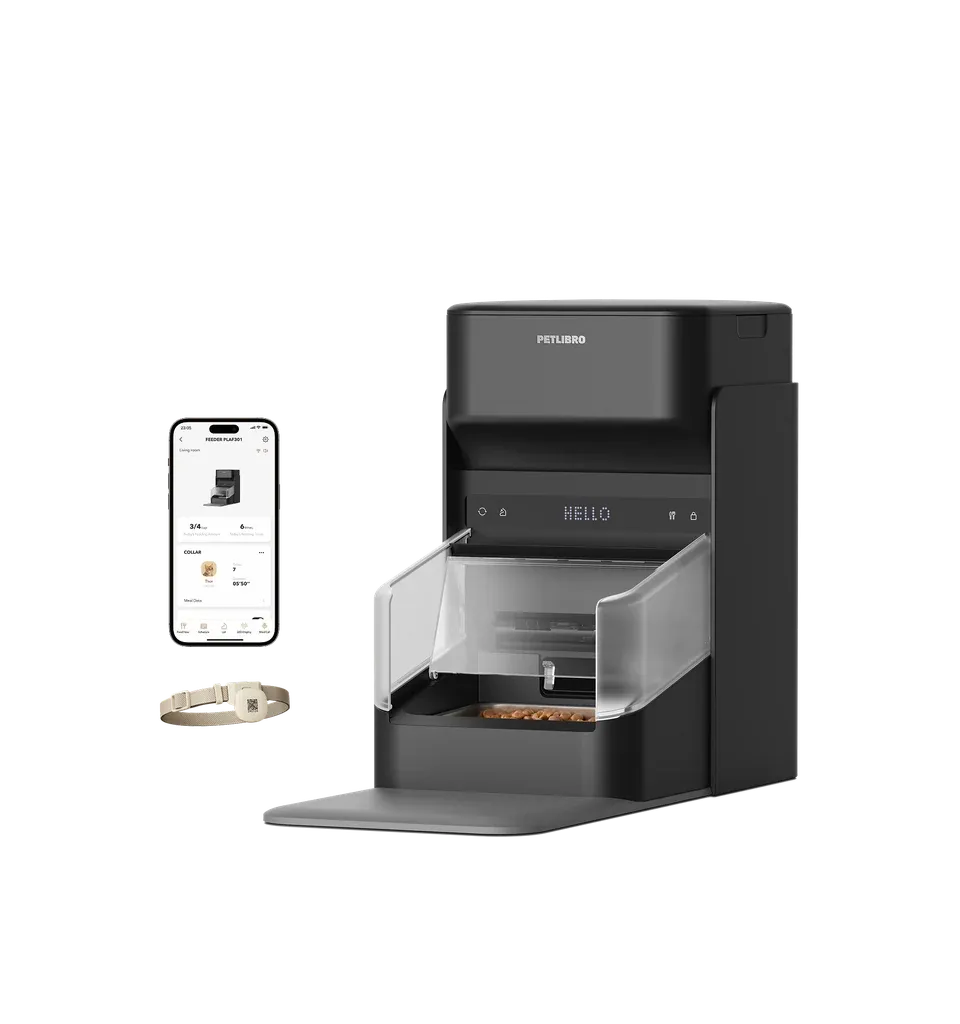
Scheduled dry meals and selective access for one dedicated collar tag per PLAF301 station.
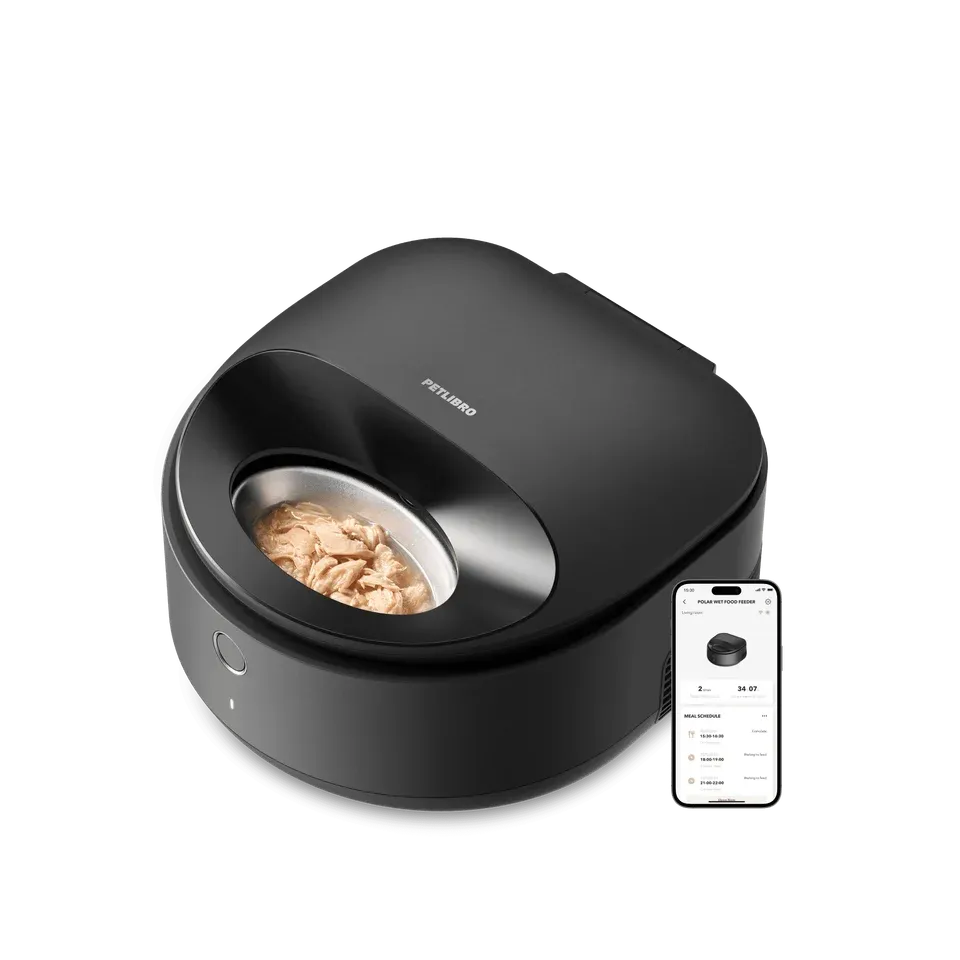
Three pre-portioned wet-food meals in the current US stainless-bowl version.
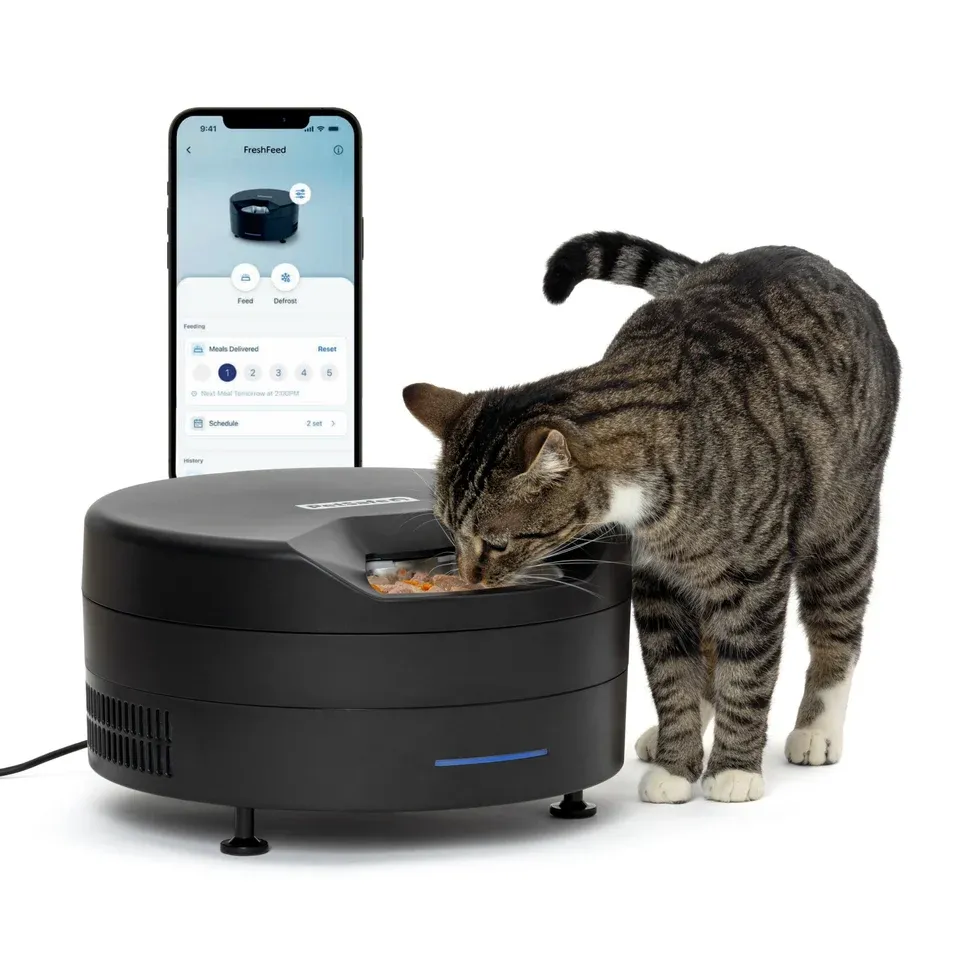
Six pre-portioned wet-food meals, app scheduling and a documented cleaning routine.
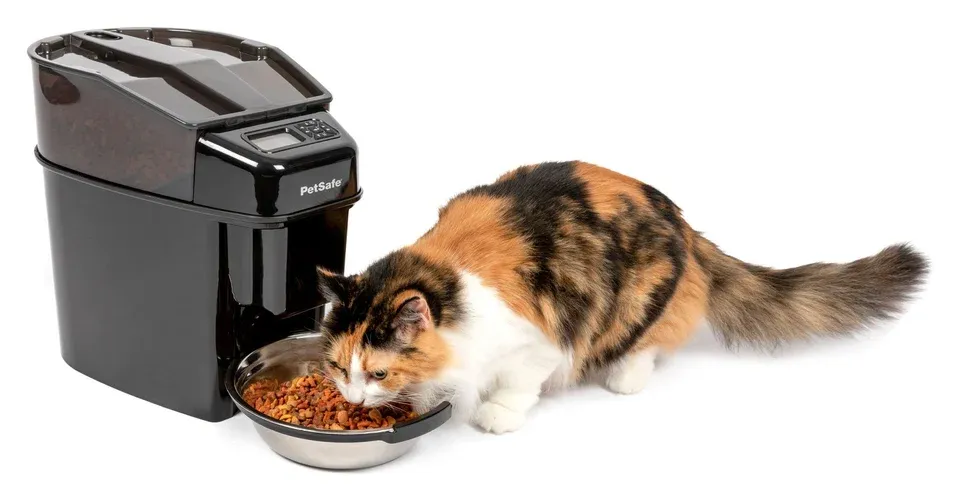
An on-device hopper feeder for a fixed dry-food routine. The US PFD00-14574 offers volume portions and needs conveyor preparation after refills; it does not identify the pet eating from its bowl.
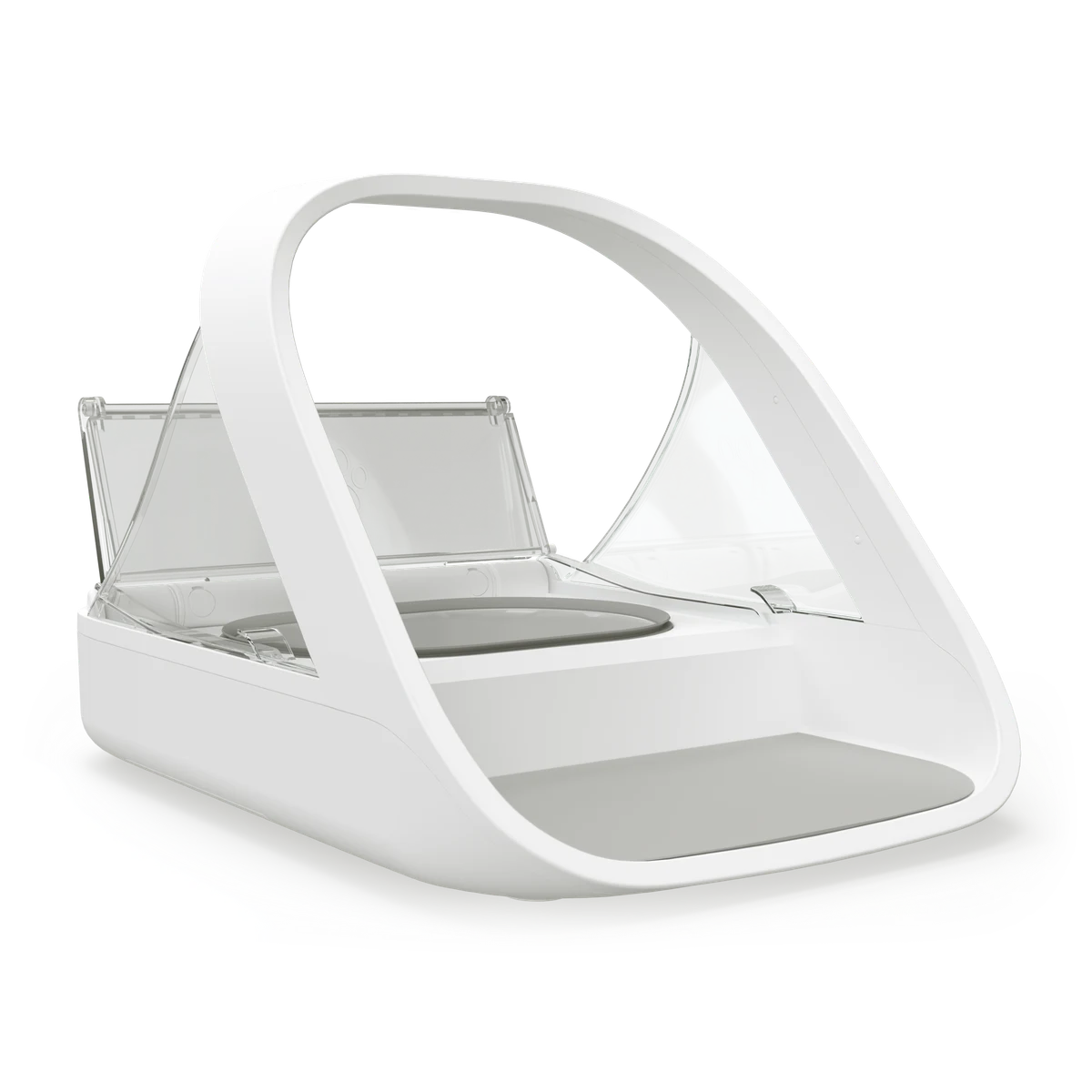
Standard non-Connect selective access to wet or dry food you serve yourself, using a compatible chip or RFID tag.
Use the model reviews for context, current buying options and the full care instructions.
| Criterion | PETLIBRO One RFID | PETLIBRO Polar Smart Wet Food Feeder | PetSafe FreshFeed Refrigerated Pet Feeder | PetSafe Healthy Pet Simply Feed | SureFeed Microchip Pet Feeder |
|---|---|---|---|---|---|
| Feeding approach | Scheduled dry-food dispensing with selective tag entry | Three rotating compartments beneath a sliding lid | Six rotating compartments; food is portioned by you | Locally programmed scheduled conveyor dispensing | Access to a manually filled served bowl |
| Access identification | One dedicated collar tag; no implanted chip; reader mat required | Not verified | Not verified | No pet identification; shared open bowl | Compatible implanted chip or SureFlap RFID tag (one included) |
| Food type | 3 L; dry kibble 2–15 mm | Commercial wet-food diets; PETLIBRO advises against raw food | Wet/fresh meals; no pet-identity selection | Dry or semi-moist kibble; no wet food | 400 ml; wet or dry; no refrigeration |
| Capacity | 3 L; dry kibble 2–15 mm | 200 ml per serving; total fill capacity not established | Published serving-volume figures conflict; confirm your portion needs | 24 cups; dry or semi-moist food | 400 ml; wet or dry; no refrigeration |
| Power | Adapter; 3 alkaline D cells for emergency backup (not included) | Corded adapter; optional 3 AA cells for documented schedule backup | Not verified | Four alkaline D cells (not included); adapter sold separately | 4 × 1.5 V alkaline C cells; not included; no rechargeable design |
Choose PETLIBRO One RFID for scheduled dry meals with dedicated-tag access. Choose standard SureFeed for wet or dry food you portion yourself, using a compatible implanted microchip or SureFlap tag. One delivers meals; the other protects access to a served bowl.
Read comparisonChoose FreshFeed if six prepared portions matter and you can hand-wash its plastic tray. Choose the current US Polar if three portions and a lower listed purchase price fit your routine. Both use manufacturer-stated cooling; neither has independent matched temperature validation here.
Read comparisonChoose PetSafe Simply Feed for an onboard schedule and dry or semi-moist kibble. Choose PETLIBRO One RFID when scheduled dry meals also need dedicated-tag access. The decision is whether you need meal timing alone or timing plus pet identity.
Read comparison
Compare no-network setup, stored schedules during Wi-Fi loss and local access to food you serve. Exact models and backup-power limits stay separate.
Compare three feeder approaches for two cats: shared schedules, separate tagged dry meals and chip-controlled access to wet or dry food you serve.
Choose selective access around the food you serve, the schedule you need and each cat’s identification, training and cleaning routine.
Compare cooling methods, serving exposure, portion counts, cleaning and backup power using exact FreshFeed and Polar examples.


 Cat feeders