



Cat fit & access
Entry, chamber design and documented eligibility
Why this is unscored

An evidence-backed editorial rating has not yet been assigned to this criterion. Missing evidence is not a zero score.
Litter-Robot 4 · US standard device
Covered rotating litter cleaning with local operation and optional connected history.
Consider LR4 for a covered chamber and optional monitoring ecosystem. Check comfortable entry and turning space, then budget for consumables and accessories. Selected external accounts value less daily scooping but differ on odor and sticking clumps; automatic sifting does not remove cleaning responsibilities.
Entry, chamber design and documented eligibility
An evidence-backed editorial rating has not yet been assigned to this criterion. Missing evidence is not a zero score.
The everyday care routine
An evidence-backed editorial rating has not yet been assigned to this criterion. Missing evidence is not a zero score.
Settings, access and power
An evidence-backed editorial rating has not yet been assigned to this criterion. Missing evidence is not a zero score.
Purchase and recurring costs
An evidence-backed editorial rating has not yet been assigned to this criterion. Missing evidence is not a zero score.
We assess documented fit for the household use case, daily care, controls and ownership cost. A numerical rating requires an editorial rationale and supporting evidence.
1–3: poor fit or major documented obstacles. 4–6: usable with substantial routine or dependencies. 7–8: good documented fit with clear caveats. 9–10: exceptional fit requiring stronger comparative evidence.
Scores are editorial judgements based on documented evidence. They are not measurements from hands-on testing and do not predict how your pet will respond.
Use compatible litter to the MAX line. Reset after litter, waste or placement changes.[2]
Check the drawer and replenish litter as needed. The manual documents compatible 10–13-gallon bags.[2]
Unplug first. Wash the detached globe with mild soap and water, dry fully and keep the base wipe-only.[3]
Cats.com reports consistent clumping-clay sifting and good odor containment in its households. Its review includes a supplied beta unit and later purchased devices; these are attributed publisher observations.
Read the Cats.com review opens in a new tabTwo selected self-reported LR4 households; accessories and routines differ. These accounts do not establish prevalence or a failure rate.
Two selected self-reported LR4 accounts, not a representative survey; accessories and household routines differ. No verified-purchase authentication or failure-rate estimate.
These are selected external accounts, not aggregate satisfaction or PetDecider reader reviews.
US listings · USD · Before tax and shipping. Confirm the exact model and package.
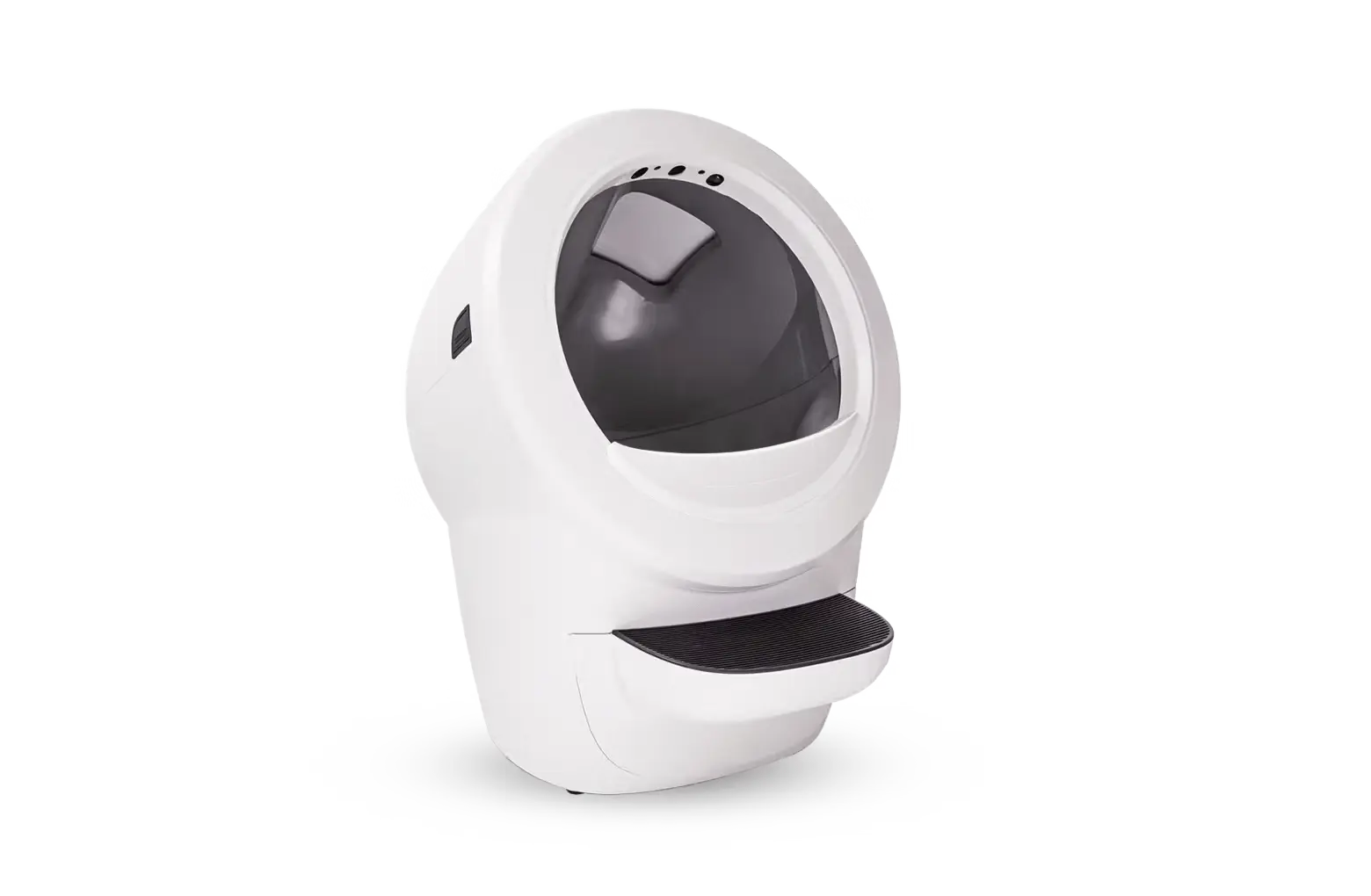
White Litter-Robot 4 with fence and step; standard package, no LitterHopper.
CheckedUS Litter-Robot 4; confirm white finish, standard fence/step and no hopper before ordering.
CheckedCompare the standard device separately from LitterHopper, extended warranty and Whisker+. Litter, liners and filter costs continue after purchase.
Prices are checked snapshots, not a live feed. Stock, coupons, package revisions and final checkout totals can change. These links are not affiliate links.
Covered-cylinder cleaning with a lower entrance and two sifter options.
The Litter-Robot 4 is worth considering if you want a covered rotating chamber and a monitoring ecosystem that can expand later. Start with the space your cat needs to enter and turn, then decide whether extended history and accessories matter to you. The strongest reason to shortlist it is the combination of local operation and optional connected features—not a promise of maintenance-free ownership. Editorial assessment.
Whisker's US specification diagram gives a 22 × 27-inch footprint, 29.5-inch height and 15.75 × 15.75-inch opening. The entrance is 12 inches above the floor, with an intermediate step at 6.9 inches. Included basics are a fence, step, carbon filter and five drawer liners. Optional refill hardware is separate. US product information.
Use the MAX fill mark rather than guessing from chamber size. The manual favors clumping clay and excludes wood pellets, newspaper and non-clumping litter. Some small crystals can sift, but pale or translucent types can affect readings. Automatic mode requires every cat that can access the device to meet the manufacturer's 3-pound minimum. Placement and weight changes require attention to the reset procedure. Manual, setup and care sections.
For deeper cleaning, the detached globe can be washed, but the electronics-bearing base cannot be soaked or sprayed. Remove the filter, use mild soap and water, and fully dry before assembly. No bleach. Component cleaning guide.
Editorial inference: A covered chamber can be a mismatch for a cat that avoids enclosed trays. Accessories and extended-history membership should be evaluated separately from the device price. Automatic sifting leaves routine litter refills, waste disposal and cleaning to the owner.
Kate Barrington at Cats.com reports consistent sifting with clumping clay and good odor containment in its households. Its review includes a supplied beta unit and later purchased devices; these are publisher observations, not a reliability estimate.
One four-month LR4 plus LitterHopper owner valued reduced scooping and a weekly waste/refill routine. A longer-term owner reported side-directed urine, sticking clumps and odor despite cleaning. These two households illustrate contrasting outcomes; accessories and routines differ.





 What to weigh